
SAFARI & TOUR OF VICTORIA FALLS IN ZAMBIA
Learn More On AfricanMecca Safari Tier Ratings & Experiences For Zambia
CONTACT AN EXPERT ON VICTORIA FALLS TOURIntroduction To Victoria Falls
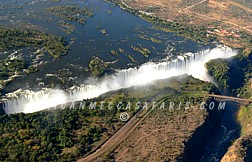
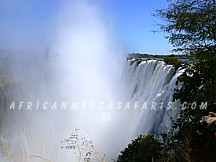
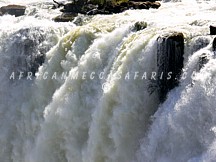
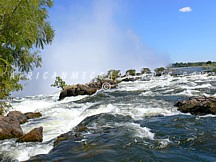
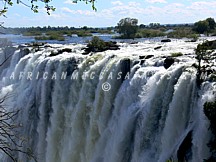
Described by the Kololo tribe living in the area in the 1800's as 'Mosi-oa-Tunya' - 'the Smoke that Thunders' and in more modern terms as 'the greatest known curtain of falling water', Victoria Falls are a spectacular sight of awe-inspiring beauty and grandeur on the Zambezi River, bordering Zambia and Zimbabwe and one of the wonders of the world. Columns of spray can be seen from miles away as 546 million cubic meters of water per minute plummet over the edge (at the height of the flood season) over a width of nearly two kilometers into a deep gorge over 100 meters below. The wide basalt cliff, over which the falls thunder, transforms the Zambezi from a wide placid river to a ferocious torrent cutting through a series of dramatic gorges. Visiting Victoria Falls at various times of the year will provide completely different experiences of the Livingstone and falls area. Peak flood season is around March and April and the full power of the falls can be experienced in all its glory. But due to the masses of spray rising from the fallen water the full width of the Falls cannot be seen on foot. The aerial view at this time however is spectacular, with clouds of spray rising high into the sky. As the water reduce the view of the falls gets better and better through the year, but at it's lowest, around November and December the falls become little rivulets running over the edge and in some places along the 1.7 kilometer width little or no water falls at all.
Victoria Falls Hotels & Tours In Livingstone
1. Hotels in Livingstone – Victoria Falls2. Day – City Tours In Livingstone – Victoria Falls
Creation Of The Victoria Falls
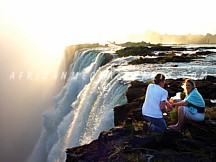
Geologists believes that the earths movement in an in a earlier era diverted the south-easterly flowing upper Zambezi to a general easterly direction and so initiated the development of a waterfall in an area occupied by a massive bed of basalt which is about 305 meters thick. The basalt, through which the Zambezi runs for 209 kilometers in the Livingstone area is characterized by very marked joints or cracks, which may have developed as the molten lava cooled. One dominant series of joints running in an east-west direction is associated with zones of soft material within the basalt. Since the Zambezi is flowing due south in the Livingstone area, the softer materials were eroded to form the great east-west gorges. Upstream retreat of the Victoria Falls is due to a second major series of joints running north-south. Gradual erosion of small joints that run north-south caused the river to be concentrated into a narrow fissure and the broad fall line was abandoned. Once this happened, it was only a question of time before the narrow gorges cut back into another transverse fracture zone of soft material. This gouging out of the soft zone again established a broad fall. This process has been repeated over many years and the zigzag gorges represent seven previous lines of Falls. The Devil's Cataract, on the Zimbabwe side, which is 21-37 meters lower than the rest of the present falls, shows how the force of water is starting to cut back along such a line of weakness. It will probably erode its way back to another east-west joint where a future line of the falls will eventually become established.A Little History & Recognition Of The Victoria Falls
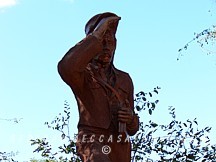
In 1851,Dr David Livingstone, famous missionary explorer first heard of the great waterfall, but it was only in 1855 that he set out to visit it. He spent the night on Kalai Island a few kilometers upstream of the Victoria Falls, having come down river by foot, and the next morning set off in a small canoe to approach the thundering smoke. He landed on the biggest island on the lip of the falls, now called Livingstone Island and from there obtained his first view of the falls. David Livingstone writing best explains his first awe-inspiring experience of the falls, when he wrote: "Creeping with awe to the verge, I peered down into a large rent which had been made from bank to bank of the broad Zambezi, and saw that a stream of a thousand yards broad leaped down a hundred feet and then became suddenly compressed into a space of fifteen to twenty yards....the most wonderful sight I had witnessed in Africa." ...."No one can imagine the beauty of the view from anything witnessed in England. It had never been seen before by European eyes, but scenes so lovely must have been gazed upon by angels in their flight".Sightseeing Experience Of The Victoria Falls
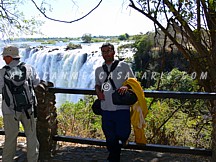
1. Victoria Falls Walk: Facing the Victoria Falls is a protruding wall of basalt cushioned by mist-soaked rain forest. A path along the edge of the forest provides the visitor who is prepared to brave the tremendous spray with an unparalleled series of views of the Falls.2. Viewing Locations: A special vantage point is across the Knife edge bridge, where visitors can have the finest view of the Eastern Cataract and the Main Falls as well as the Boiling Pot where the river turns and heads down the Batoka Gorge. Other locations for a superb view of the falls include The Victoria Falls bridge and the Lookout Tree which commands a panoramic view across the Main Falls.
3. The Famous Victoria Falls Bridge: Cecil Rhodes in 1900's commissioned the Victoria Falls Bridge, although he never visited the falls and died before construction began, he expressed his wish that the "railway should cross the Zambezi just below the Victoria Falls. I should like to have the spray of the falls over the carriages." The bridge affords a magnificent view both down the gorge on the one side and through to the falls on the other. The immense depth of the gorge can be fully appreciated from this perspective and combined with the sea green river below, the shiny black rock face and lush green foliage, the 360 degree view from the bridge is breathtaking.
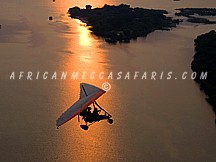
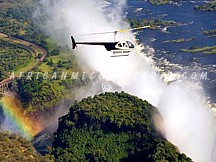
4. Panoramic and Birds Eye View Of The Falls: To fully appreciate the incredible size of the Falls, and the awesome power of the water as it carves into the deep zig zagging gorges for eight kilometres, one must see it from the air. Micro-light and fixed wing flights are available. The pilot will take you along the wide tranquil upper Zambezi, and over the huge 2 km rent in the earth. The breathtaking sight of this magnificent natural phenomena, seen in all its glory from the air, is unforgettable.
5. Dry Season Viewing Of Livingstone Island: During the drier months when water levels are low it is possible to walk all the way across to Livingstone Island, the place where David Livingstone had his first glimpse of the Victoria Falls, which has one of the most spectacular views of the falls.

Victoria Falls Safari Tour Experiences In Livingstone, Zambia
Whitewater Rafting On Zambezi River: Seasonal Whitewater Rafting On Zambezi River are run in large rubber rafts, launched from just below the Falls. You can experience a half day trip, full day or two day.Victoria Falls Bungi Jumping: The highest commercial bridge jump in the world with the most spectacular setting at Victoria Falls. This must be the ultimate adrenaline rush, as you leap into space, free fall, saved from the swirling water below by the rebound of the cord, then hurtled upwards again at great speed. It's an indescribable feeling that will probably change your life.
Zambezi Canoeing at Victoria Falls: A canoeing Safari on the upper portion of the Zambezi River, is a wonderful relaxing way to enjoy the astonishingly beautiful scenery that lines the river before it takes its plunge over the Victoria Falls. This part of the river is dotted with many islands of varying size; home to many birds and small animals.
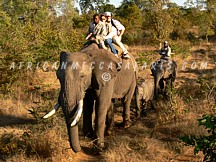
Elephant Back Safaris at Victoria Falls: Your Elephant Back Safari at Victoria Falls begins with a pickup from your accommodation and transfer to the elephant boma at Mosi Oa Tunya National Park where you are introduced to your specially trained elephants and their handlers.
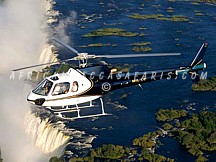
Victoria Falls Helicopter Flight: Experience the Victoria Falls with a birds eye view. Take off from the helicopter site and climb to a height of 1500 feet above the ground, while approaching the magnificent Victoria Falls.
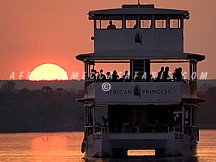
Other Livingstone Victoria Falls Tours are: Zambezi River Boat Cruise, Dinner On Royal Livingstone Express Train Service, Livingstone Island Tour, The David Livingstone Museum Tour, Railway Museum & Tour of Livingstone Town, Chief Mukuni Village Cultural Tour, Maramba Market, Mosi-o-Tunya National Park Safari, Tours On The Segway and many more.
CONTACT AN EXPERT TO PLAN YOUR ZAMBIA SAFARI
Read More On Other Waterfalls In Zambia
AFRICANMECCA REVIEWS
What are our Customers saying about our safari holidays?
On behalf of myself, my wife and my two adult daughters, I want to sincerely thank you and AfricanMecca Safaris for our fabulous recent safari. Everything you promised exceeded our expectations and was superb, which is saying a lot since this was our second trip, having had a wonderful Botswana Safari 10 years ago. Do not ever hesitate to use me as a reference.
Robert Schenkein - prVision Photography Studio - Colorado, United States
Chobe was delightful, less than half full. Sussi and Chuma, very nice, again only 13 people in all. All the game drives and river cruises were excellent. We had great weather. The ability to get really close is in inspiring. EVERYWHERE we went, the people were warm, helpful and charming. Thank you so much. We will be recommending your services to all.
Thomas Kelch - California, United States
Raza Visram at AfricanMecca planned the most amazing trip for my friend and I. I wanted to go to 4 countries in 15 days and he made it happen. It was an aggressive itinerary and Raza planned it so well, that the transitions were seamless. The last leg of the trip was Botswana for another Safari and we stayed at the most beautiful lodge. The excitement in seeing the animals so closely is indescribable.
Karin Alsdorf - New Jersey, United States
I had a wonderful trip to Africa and I would highly recommend your company.I have been to Africa many times and I have never had such wonderful service. The guide and safari vehicle were both great and all the lodges were outstanding. We will be going to Africa again the year after next and I assure you I will be contacting you. Thanks again for arranging such a great trip.
Ronald Price, President, Ron Price Motors Group - California, United States
Greetings to you and our most fervent thanks for a wonderful trip of Kenya, Zanzibar, South Africa & Victoria Falls. This was truly a perfect vacation. Thank you so much for all your arrangements. It was a trip filled with different kinds of adventures. We experienced and learned so much. Would highly recommend it to others who are interested in similar trips. Wishing you the very best.
Adrienne & Barrie Carter - Canada
Thank you for everything; we had an amazing honeymoon. Words really can't describe our experience, all we can really say was that it was the most amazing experience of our lives and we would recommend AfricanMecca to anyone. We hope to visit Africa again sometime next year! Thank you & all of your staff for an amazing & perfect honeymoon.
Rick Sagoo - London, United Kingdom
CONTACT AND TALK TO OUR ZAMBIA TOUR EXPERTS TODAY TO START YOUR TRIP PLANNING PROCESS
Request Zambia Custom Or Tailor-Made Safari Vacation Pricing Based On Your Specific Travel Dates At Your Preferred Safari Tier Lodge Or Camp
CONTACT AN EXPERT ON ZAMBIA & VICTORIA FALLS SAFARI PRICES